


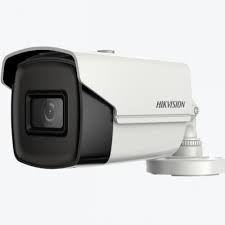


Camera systems (CCTV surveillance systems)
These are visual surveillance systems designed to secure facilities and monitor activities at various locations. They include indoor and outdoor cameras, digital recording devices, display screens, and remote control and monitoring systems.
Used in homes, businesses, hospitals, warehouses, and public facilities to enhance security, prevent intrusion, and document events.
- Types of cameras in surveillance systems
- 1️⃣ Indoor Cameras
- Used inside buildings, such as offices, homes, and shops.
- They are often small in size and less resistant to external factors.
- 2️⃣ Outdoor Cameras
- Designed to withstand harsh environmental conditions such as rain, dust and high temperatures.
- It features a waterproof and shockproof protective case.
- 3️⃣ Fixed Cameras
- Fixed in one direction, used to observe a specific point at a fixed angle.
- 4️⃣ PTZ Cameras: Pan, Tilt, Zoom
- Movable in all directions and optical zoom.
- It is used in locations that require wide and direct monitoring.
- 5️⃣ Infrared/Night Vision Cameras
- Equipped with infrared illumination, for clear vision in complete darkness.
- 6️⃣ Hidden/Covered Cameras
- Used in sensitive security situations or when covert surveillance is required.
- 7️⃣ Network cameras (IP cameras)
- The signal is transmitted over digital networks (Internet or LAN).
- Allows remote monitoring from anywhere in the world.
- 8️⃣ Multi-sensor Cameras
- It has multiple lenses to monitor multiple areas at the same time with a wider viewing angle.
- 9️⃣ Thermal Cameras
- Used to monitor temperatures or thermal objects, especially in sensitive locations or for early detection of fires.
- Basic camera system components
- 1️⃣ Cameras
- It is the main component, and it varies depending on the purpose of the installation (indoor and outdoor surveillance, night surveillance, high-resolution digital surveillance, etc.).
- 2️⃣ Recording devices (DVR/NVR)
- DVR (Digital Video Recorder): For use with analog cameras.
- NVR (Network Video Recorder): For use with network (IP) cameras.
- 3️⃣ Storage unit
- High-capacity hard drives for long-term storage of video recordings.
- 4️⃣ Screens
- For live viewing and monitoring of what the cameras are transmitting in real time.
- 5️⃣ Wires, cables, or wireless networks
- To connect cameras to recording and control devices.
- 6️⃣ Power supplies
- Such as power adapters or Power over Ethernet (PoE) in network cameras.
- 7️⃣ Software and applications
- It is used for remote control, recording management, and sending instant alerts in case of any movement or intrusion.
- Advantages of camera systems
24/7 comprehensive protection.
Immediate deterrence against attempts at theft or vandalism.
Accurate documentation of events.
Monitor daily operations and improve productivity.
Remote monitoring access via smartphones or computers.
Supporting security agencies and investigations in the event of any incident.
🛡️ The importance of professional installation and maintenance
The success of a camera system depends on selecting the right hardware, studying the site, identifying critical points, and ensuring professional installation and precise orientation. Additionally, regular maintenance is essential to ensure continued high-efficiency performance, and software and storage must be updated regularly to avoid data loss.
 English
  Arabic